

SUTO S531: 5 Benefits of a Compressed Air Leak Audit in Automotive Plants
| 21 July, 2026The SUTO S531 is the most advanced ultrasonic compressed air leak detector for industrial audits. In this success story we show how we used it in an automotive plant to identify invisible energy losses that were directly impacting operating costs.
Compressed Air Leak Audit in an Automotive Manufacturing Plant
Compressed air is considered the fourth industrial utility. However, between 20% and 30% of the air generated in a plant can be lost through invisible leaks. We recently conducted a leak audit at a plant manufacturing lighting components for the automotive industry — and the results confirmed a reality that repeats itself constantly across industry.
The Problem of Invisible Leaks
Compressed air leaks tend to appear gradually due to normal wear of fittings, hoses, valves, filters, and pneumatic accessories. In most cases, these losses go unnoticed because:
- ✗ They are too small to detect visually.
- ✗ Production noise makes them impossible to hear.
- ✗ The system continues operating apparently normally.
- ✗ Increases in electricity consumption are attributed to other factors.
Every leak represents compressed air that was already generated, treated, and distributed using electrical energy. In other words, every leak means money constantly escaping into the atmosphere.
The Audit: Ultrasonic Detection Without Stopping Production
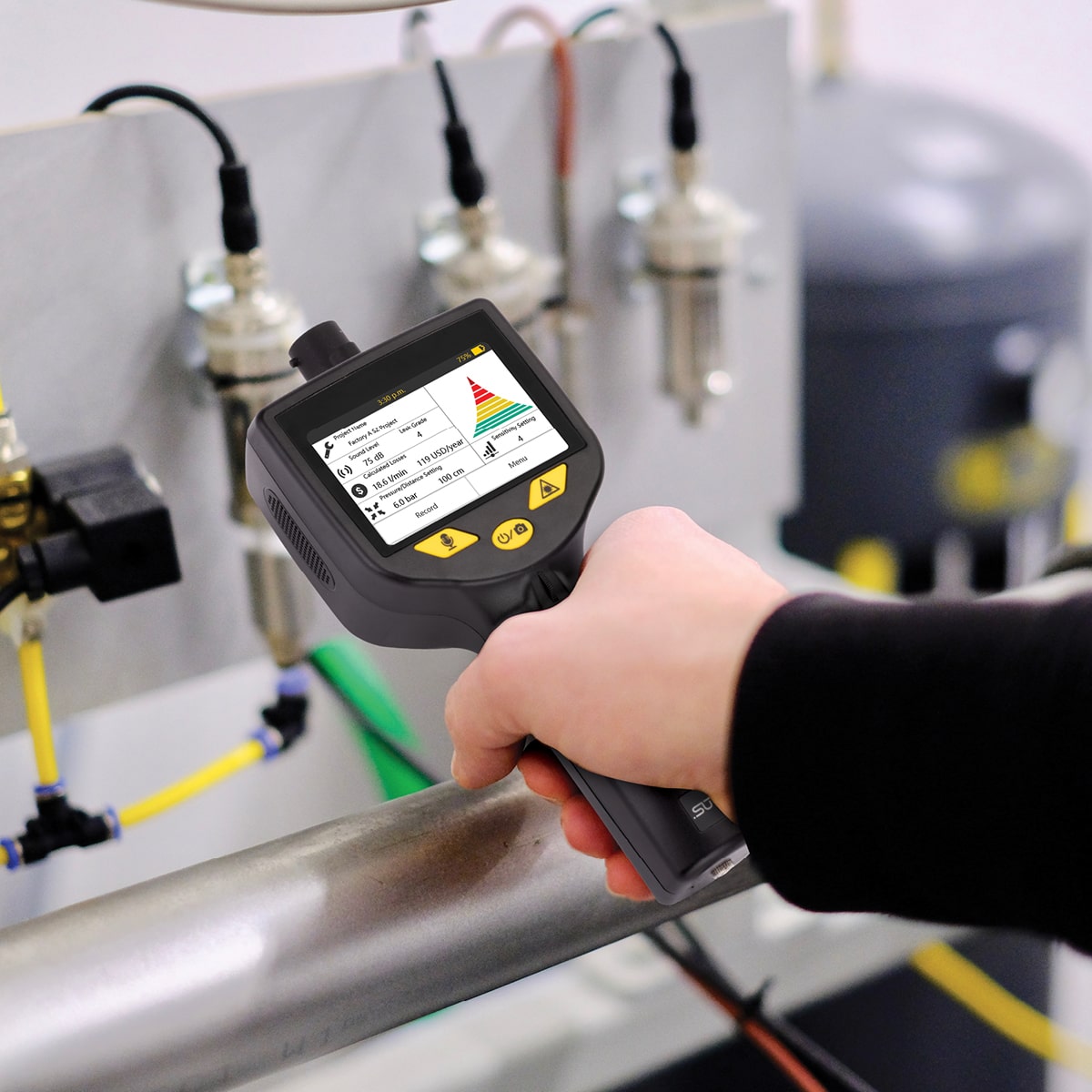
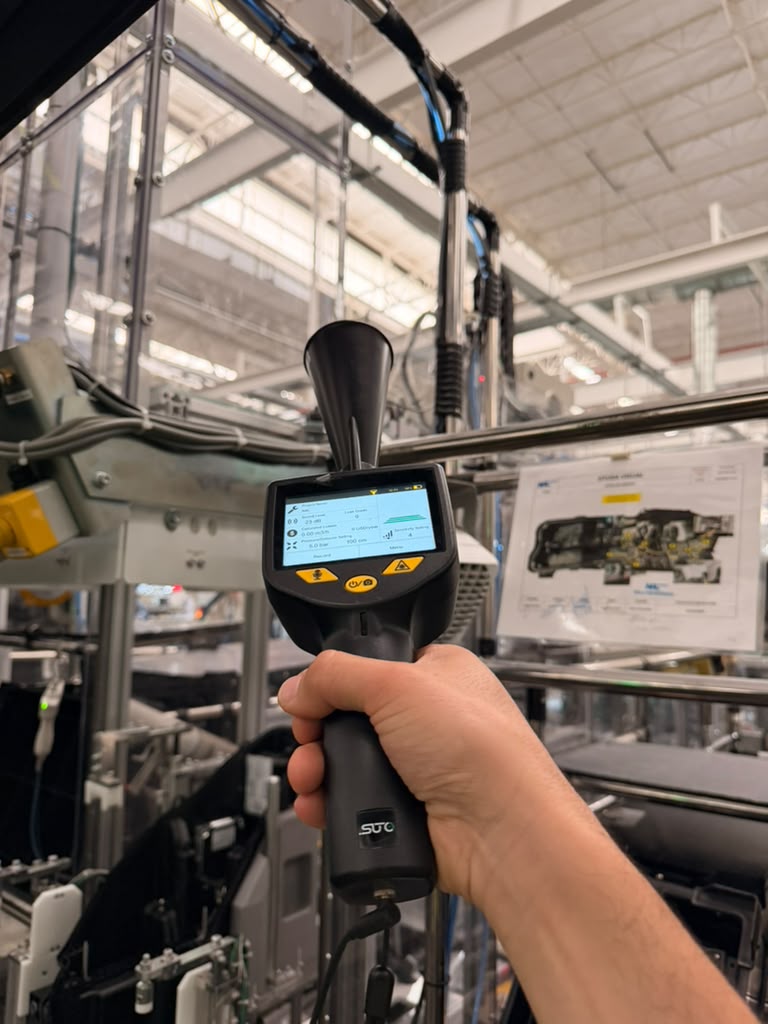
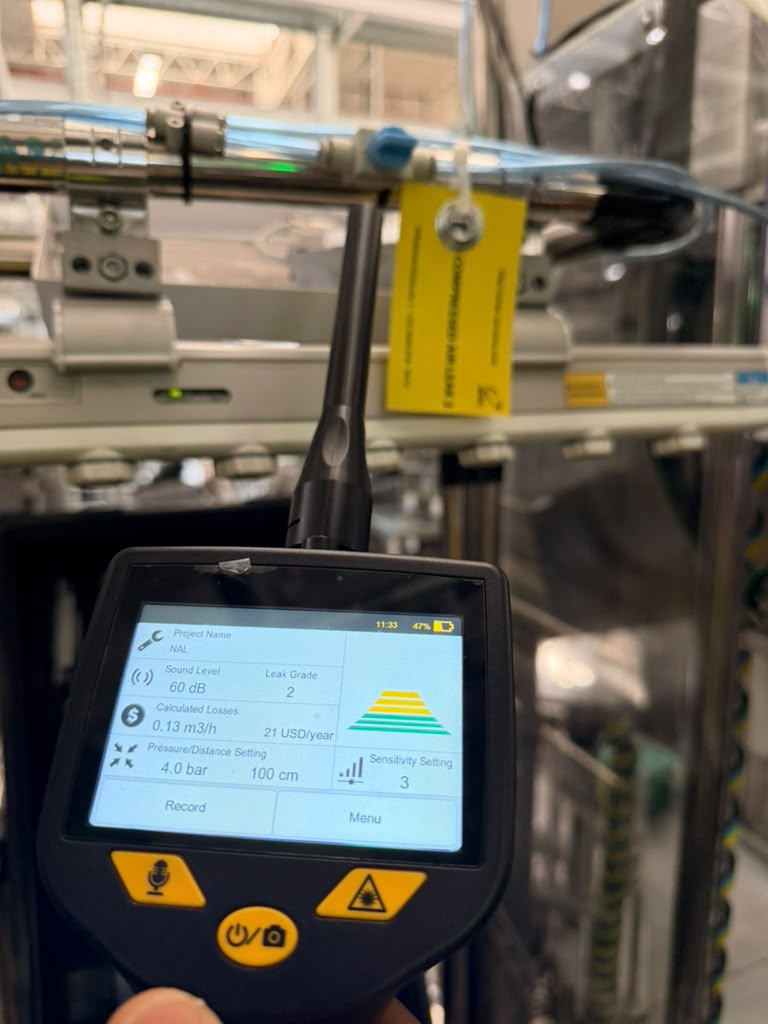
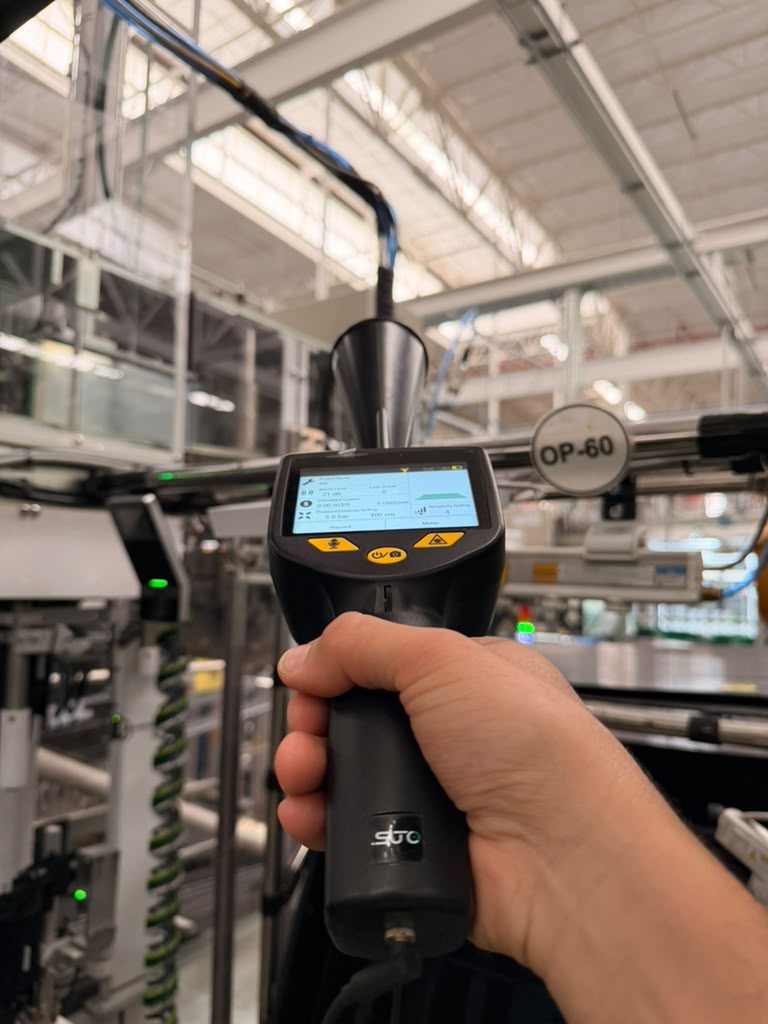
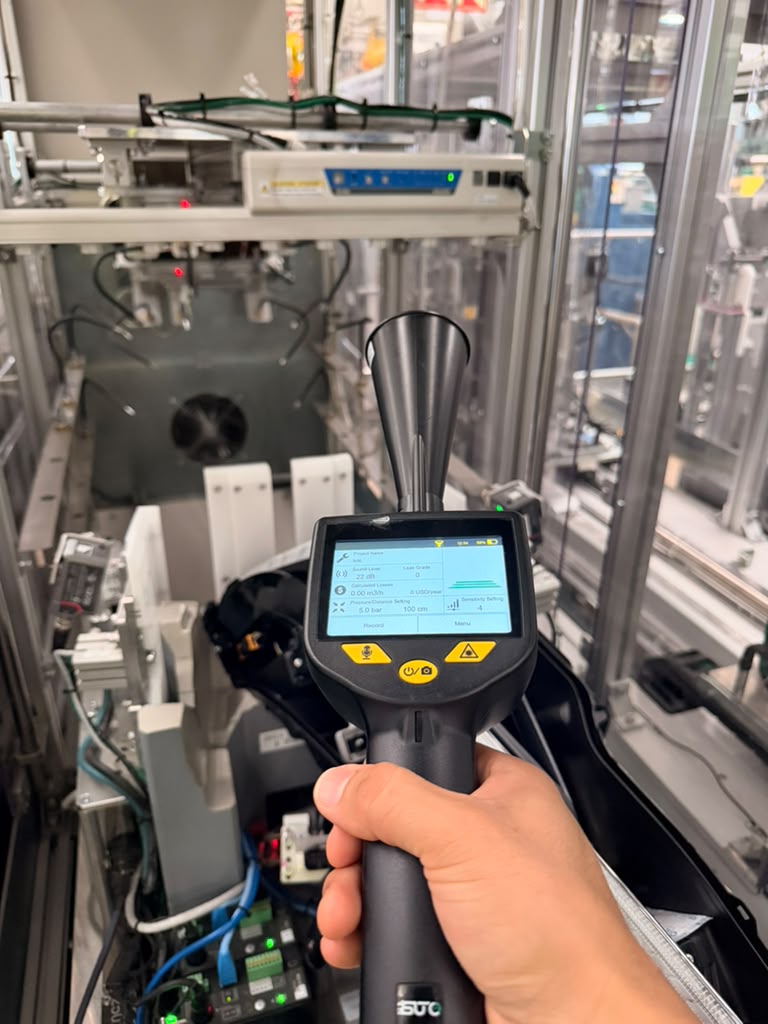
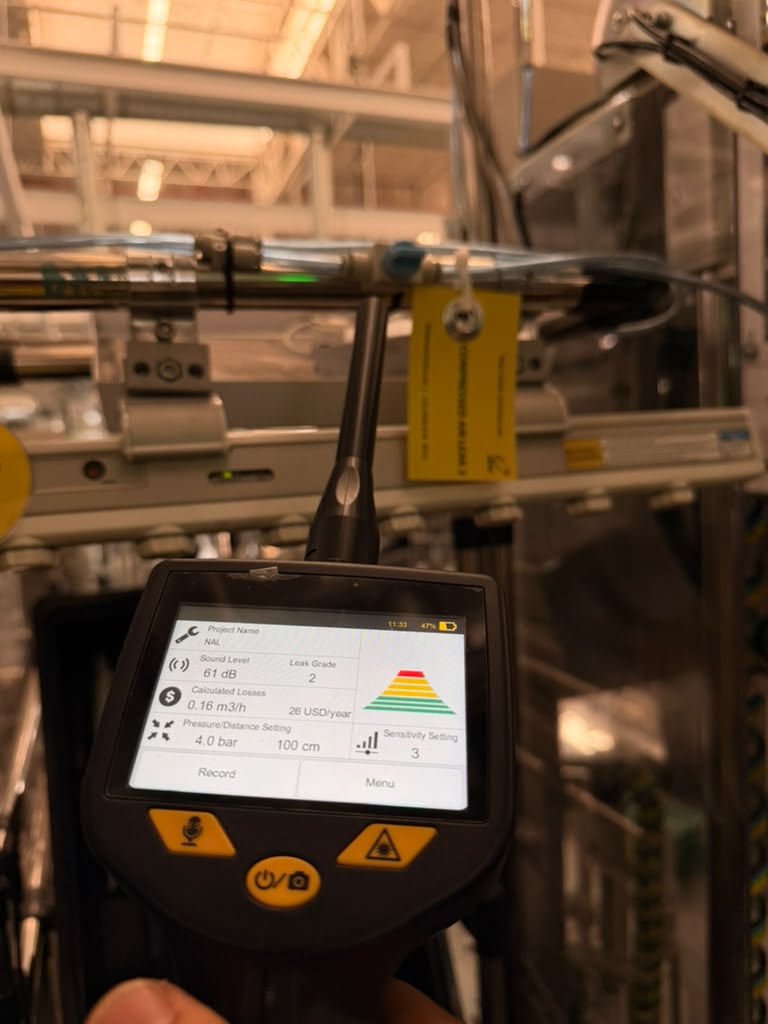
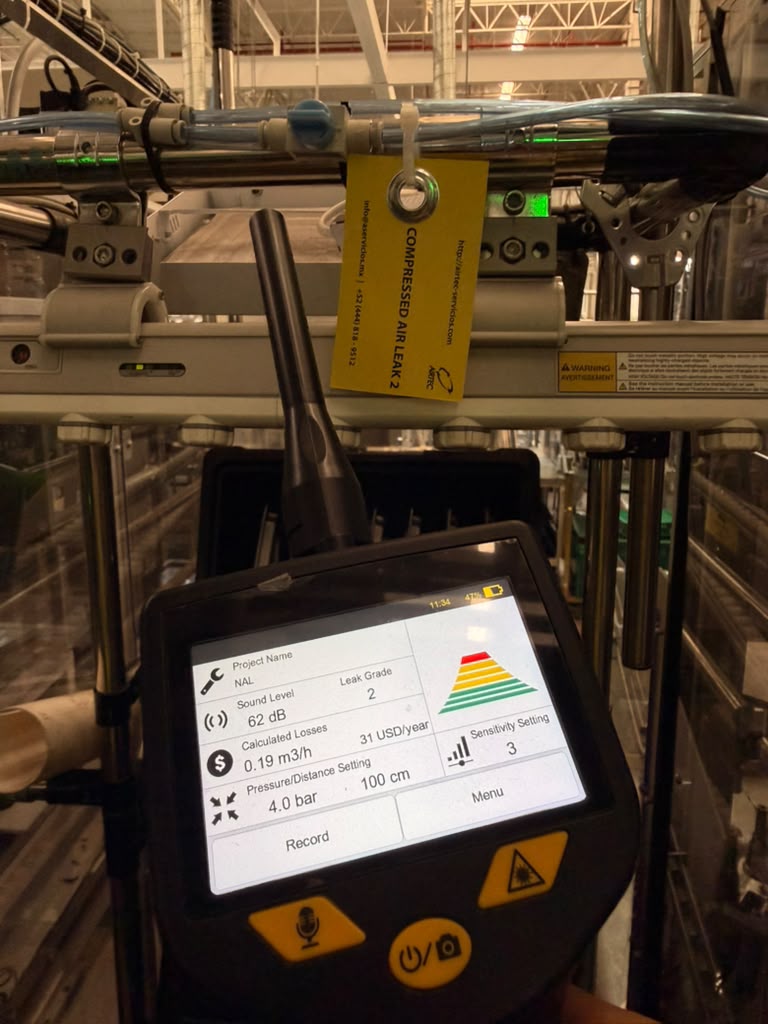
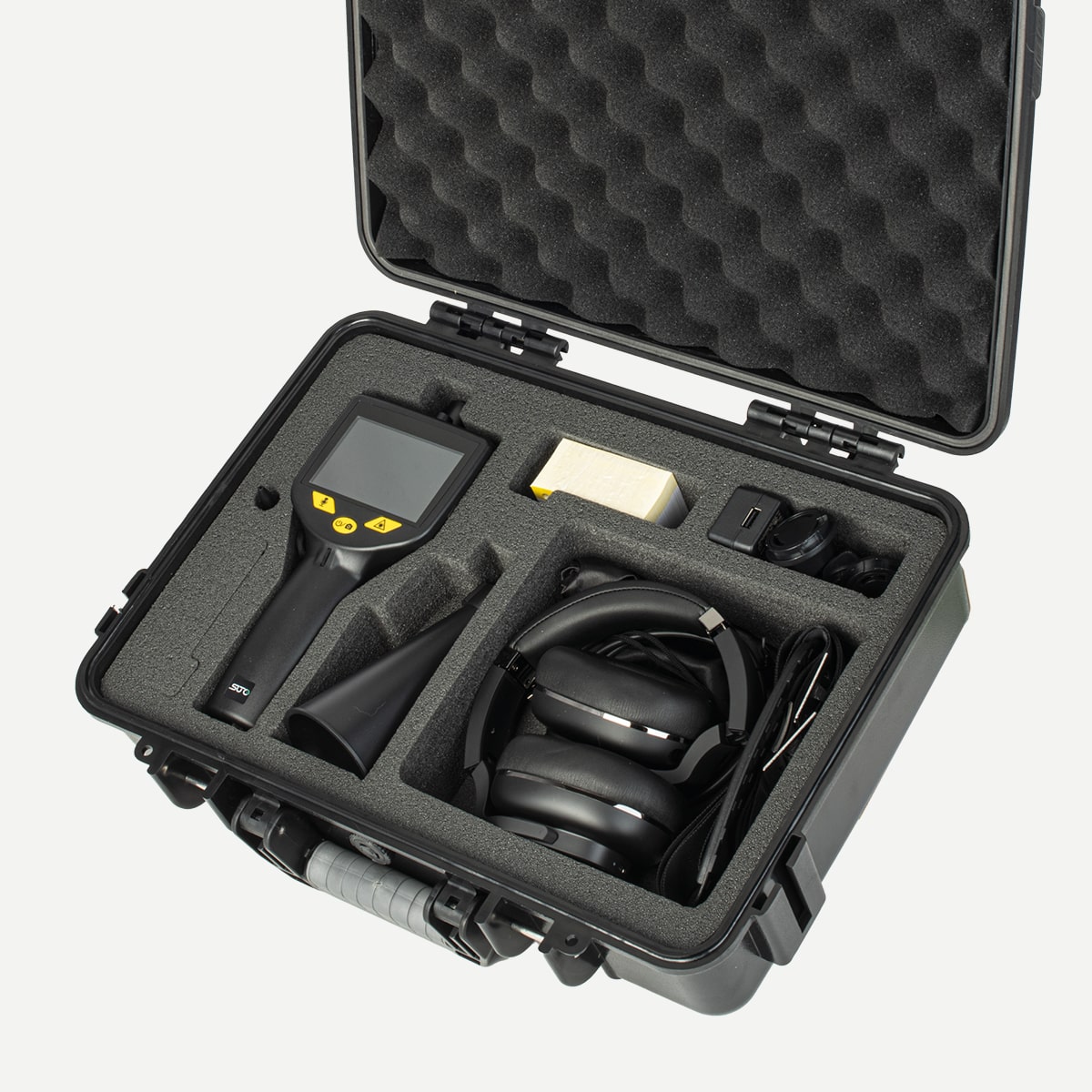
For this evaluation we used the SUTO S531 ultrasonic detector, a tool specifically designed to locate compressed air and industrial gas leaks.
When air escapes through an opening, it generates ultrasonic waves that cannot be perceived by the human ear. The SUTO S531 detects these frequencies and allows precise location of the exact point where the loss occurs. One of its main advantages is that the inspection can be performed while the plant continues operating normally, avoiding downtime or production interruptions.
During the walkthrough, the main distribution network, production branches, pneumatic equipment, and consumption points distributed throughout different areas of the plant were inspected.
What We Found
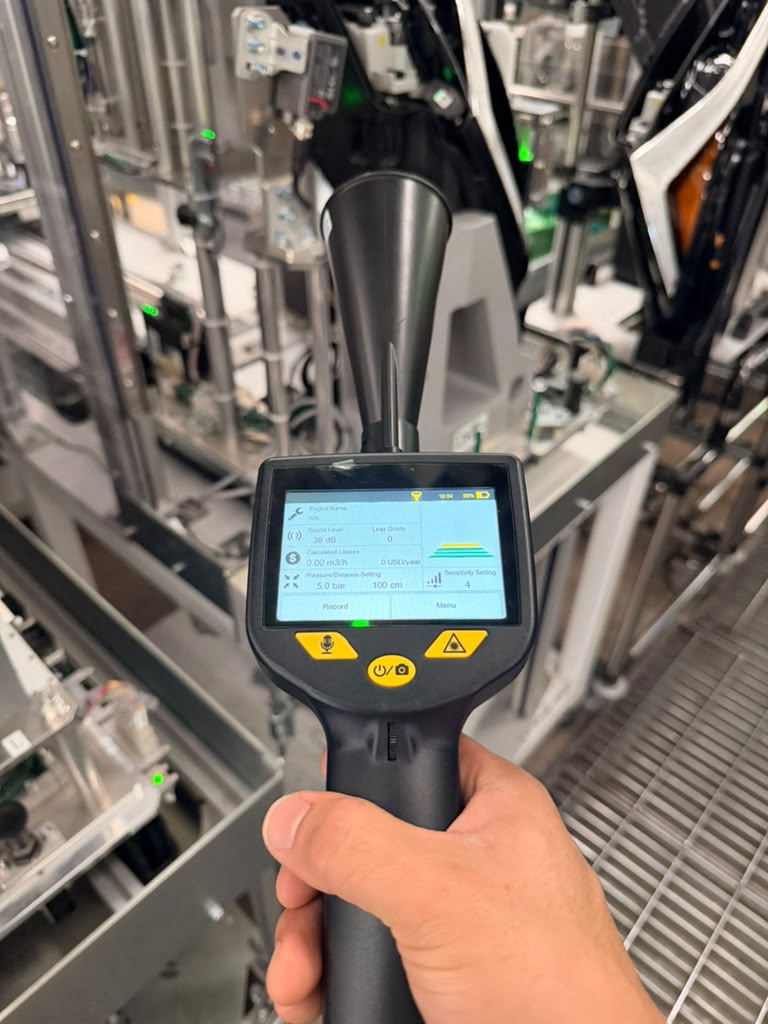
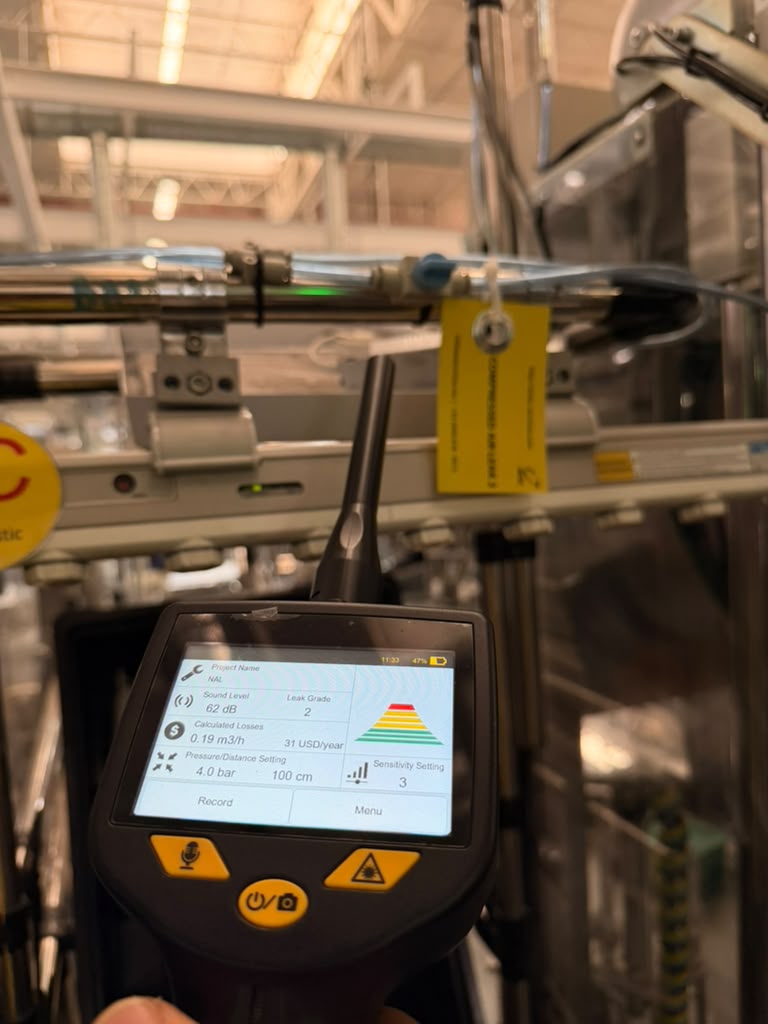
As frequently occurs in compressed air systems with several years of operation, the identified leaks were concentrated mainly in:
Affected components
- ✓ Pneumatic fittings
- ✓ Quick couplings
- ✓ Flexible hoses
- ✓ Pneumatic valves
- ✓ FRL maintenance units
The key finding
The problem is rarely one large, obvious leak. Typically it is dozens of small leaks distributed throughout the installation that, combined, represent a considerable impact on the system’s total energy consumption.
5 Benefits of Conducting a Leak Audit
1. Reduced energy costs
Every cubic meter of air that stops being wasted represents energy that no longer needs to be consumed to produce it.
2. Lower compressor load
By eliminating unnecessary losses, compressors run less and with lower demand, reducing wear and maintenance costs.
3. Greater pressure stability
A system with fewer leaks maintains more consistent operating conditions at consumption points throughout the plant.
4. Greater system reliability
Early detection of deteriorated components allows corrective actions before major failures occur.
5. Lower environmental footprint
Reducing compressed air waste also helps decrease the plant’s overall energy consumption and indirect carbon emissions.
Measure before investing
Before acquiring new compressors, it is advisable to understand what is happening inside the distribution network. Leaks are one of the fastest and most cost-effective improvement opportunities available.
Conclusion
The experience gained during this audit at an automotive plant confirms a reality we observe constantly: compressed air leaks are one of the most common and least visible energy wastes. Using ultrasonic detection tools like the SUTO S531, it is possible to locate these losses quickly, accurately, and without affecting production.
More than a maintenance activity, a leak audit should be considered a strategic tool to improve energy efficiency, reduce operating costs, and make the most of one of the most valuable resources in any industrial facility.