


Industrial Compressed Air: Quality, Efficiency and New Technologies for Smart Operations
| 29 September, 2026Industrial compressed air must be analyzed as an integrated system in which generation, treatment, distribution, monitoring and consumption are directly linked to productivity, process quality and energy cost.
Quality, Efficiency and New Technologies for Smart Operations
For years, talking about industrial compressed air meant talking mainly about compressors: capacity, pressure, power and maintenance. Today, that view is no longer enough.
In a modern plant, industrial compressed air must be analyzed as an integrated system in which generation, treatment, distribution, monitoring and consumption are directly linked to productivity, process quality and energy cost.
The evolution of filtration, drying, monitoring, nitrogen generation and compression technologies is pushing industrial plants toward systems that are increasingly intelligent, measurable and efficient.
The question is no longer just: How much compressed air does my plant need?
The right question is: What quality do I need, how much am I consuming, where am I losing efficiency, and how can I prove my system is working correctly?
→ Compressed air quality audit ISO 8573-1
Industrial compressed air as strategic infrastructure
Compressed air is one of the most widely used utility services in industry. It is present in pneumatic systems, automation, tools, actuators, instrumentation and numerous manufacturing processes.
However, producing compressed air carries a significant energy cost.
For this reason, any pressure loss, leak, poor filtration, excess demand or inadequate operating condition can become a recurring cost for the plant.
→ Compressed air and gas leak audit
Furthermore, the problem is not always the compressor. A system can have a correctly sized compressor and still show:
- Pressure drops.
- Contaminated air.
- Excessive moisture.
- Saturated filters.
- Leaks.
- Unnecessarily high operating pressure.
- Uncontrolled consumption.
- Lack of information about network behavior.
This is why system efficiency must be evaluated end to end.
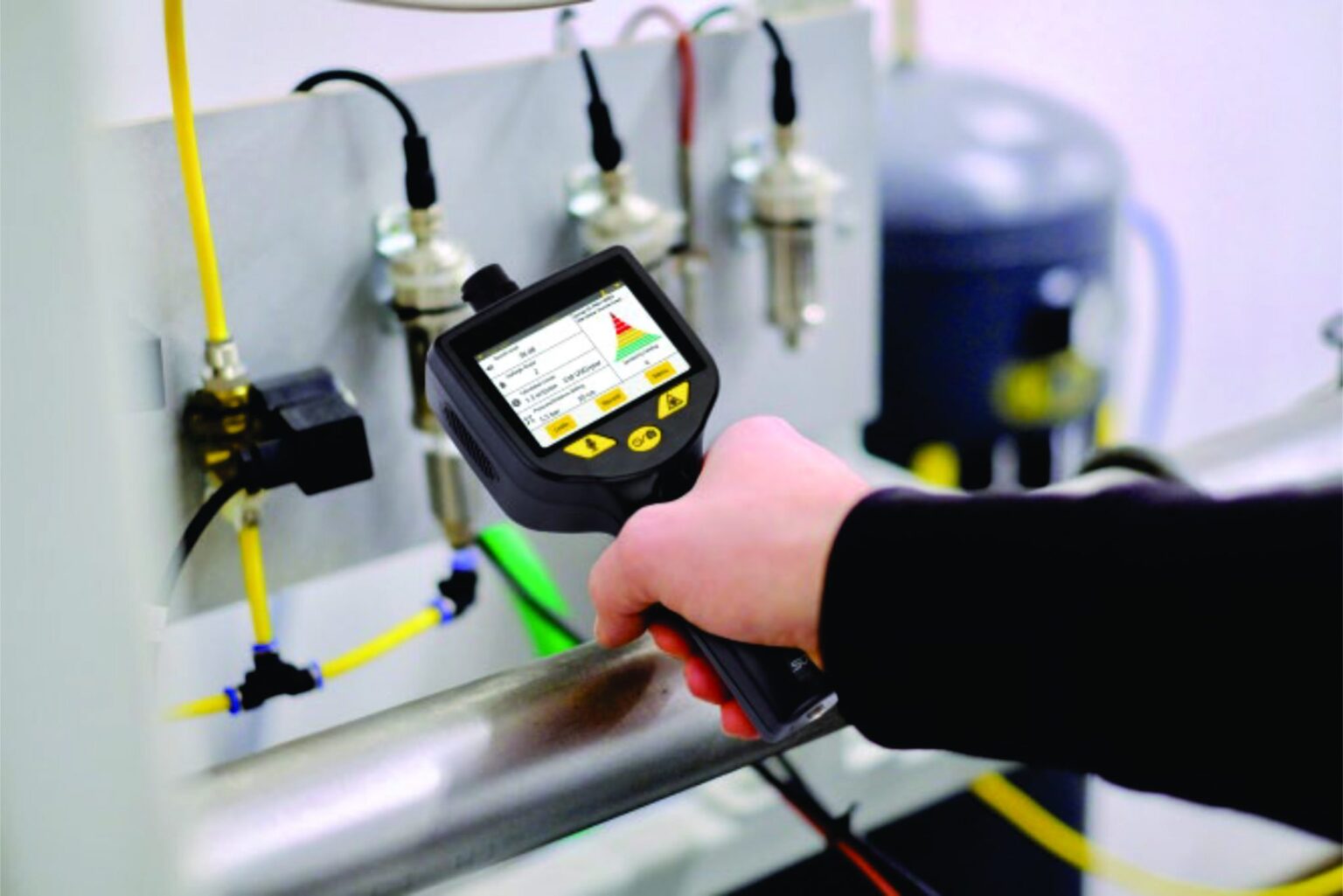
1. Air quality starts at the compressor inlet
Before discussing filters, dryers or ISO 8573-1 quality, there is a point that is often overlooked:
→ S605 Portable breathing air quality analyzer
the air entering the compressor.
Atmospheric air contains particles and contaminants whose concentration depends on the environment where the intake is installed.
Dust, suspended particles and other contaminants can enter the system if the location or conditions of the intake are not adequate.
The intake filter is the first line of protection for the compressor, but its performance depends on factors such as:
- Environmental conditions.
- Particle concentration.
- Air intake location.
- Filter element condition.
- Maintenance frequency.
- Pressure drop.
A clogged filter can increase intake restriction and affect compressor performance.
Therefore, compressed air quality begins even before the air is compressed.
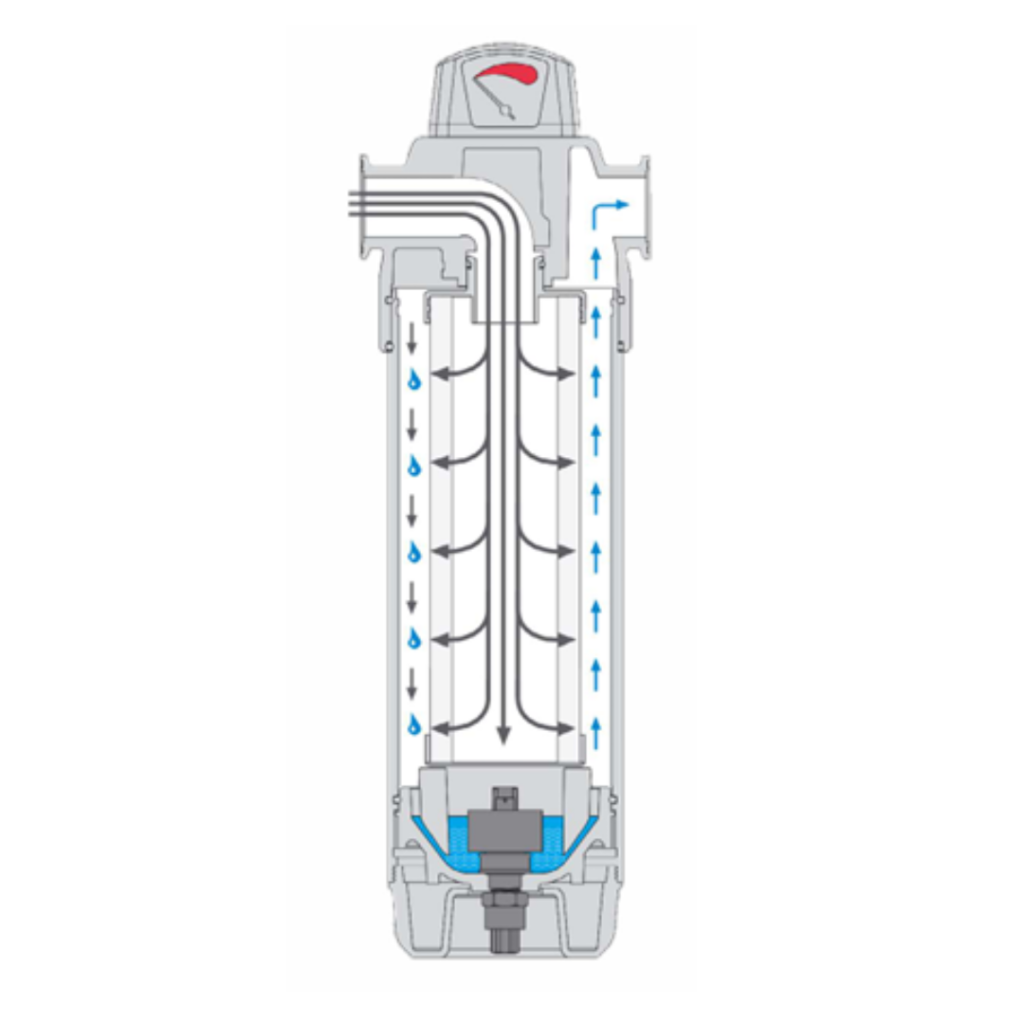
2. Filtration: protecting equipment, processes and efficiency
Once compressed, air requires different treatment stages depending on the application.
During compression and distribution, contaminants may include:
- Solid particles.
- Liquid water.
- Oil aerosols.
- Oil vapors.
- Contaminants from the environment or the system itself.
Correct filtration helps protect pneumatic components and reduce the risk of contamination in sensitive processes.
But there is a second factor to consider:
→ S Series and SHC Series filters for industrial compressed air
pressure drop.
A filter should not be evaluated only by its ability to retain contaminants. It must also be analyzed for how much it affects system flow during operation.
As a filter element accumulates contaminants, it can increase resistance to airflow. This can generate a greater pressure drop and, under certain conditions, cause the system to compensate by raising generation pressure.
The result can be an unnecessary increase in energy consumption.
That is why filtration and energy efficiency are not separate topics.
3. ISO 8573-1: when “clean air” must become a specification
In industrial applications it is not enough to say that the air is “clean”.
It is necessary to define what level of purity the process requires.
The standard ISO 8573-1:2010 establishes purity classes for compressed air with respect to particles, water and oil, regardless of the point in the system where the air is specified or measured. It also identifies gaseous and microbiological contaminants.
This allows a general quality need to be converted into a technical specification.
For example, a plant can establish a specific ISO 8573-1 class for a given process and then select the treatment technologies needed to achieve that condition.
→ S601 Fixed compressed air purity analyzer
And here lies a fundamental difference:
selecting a filter is not the same as demonstrating air quality.
Equipment selection must be accompanied by a measurement and verification strategy.
Currently, ISO 8573-1:2010 remains the published edition, while ISO is already working on a new edition that will replace it.
This makes staying current on compressed air quality and measurement methods even more relevant.

4. From preventive maintenance to data-driven monitoring
For a long time, maintenance of compressed air systems was managed primarily through schedules:
“Every few months it gets checked or replaced.”
This allows the compressed air system to be transformed into a source of information for decision-making.
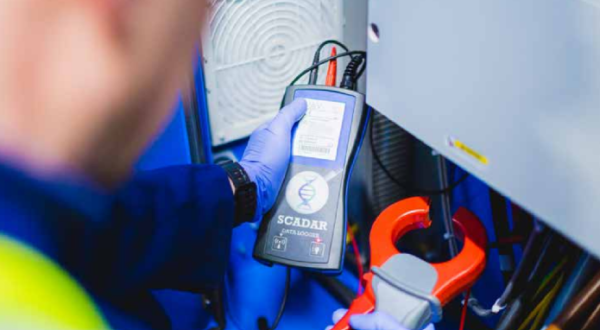
5. Energy efficiency: measure before you optimize
One of the best examples of this approach is the case of a Unilever ice cream plant.
The facility implemented a pneumatic energy efficiency module capable of monitoring and regulating the compressed air supply, as well as supervising the state of the pneumatic system in real time.
The data made it possible to analyze consumption during operation, identify unnecessary consumption and observe how demand changed when certain consumers were disconnected. It was also possible to analyze historical trends, consumption per batch and pressure and flow conditions during production events.
The lesson is clear:
you cannot optimize what you do not measure.
Before modifying a network’s pressure, changing a compressor or investing in new equipment, it is necessary to understand how demand actually behaves.
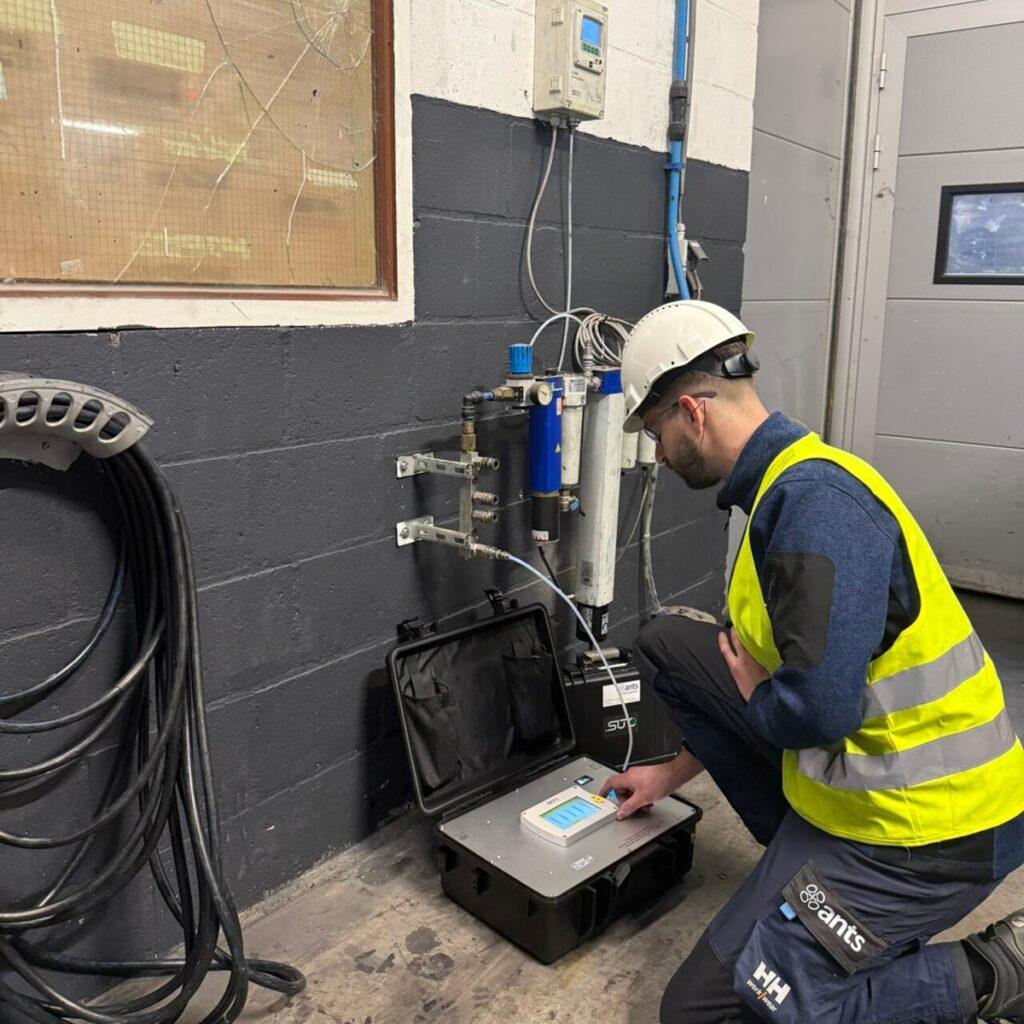
6. Nitrogen generation: a strategic extension of compressed air
Compressed air can also become the raw material for producing another industrial gas: nitrogen.
→ How to reduce costs and increase industrial efficiency with N2GEN-FLEX nitrogen generators
On-site nitrogen generation using PSA technology separates nitrogen from the other components of air and produces it directly at the plant.
This can represent an alternative for applications that currently depend on cylinders, tanks or external deliveries.
Factors to evaluate include:
- Required purity.
- Nitrogen flow rate.
- Pressure.
- Peak demand.
- Compressed air availability.
- Feed air quality.
- Energy consumption.
- Storage.
- Purity monitoring.
The South-Tek N2GEN-FLEX series, for example, uses PSA technology and offers configurations with purities from 95% to 99.999%, with capacities reaching more than 2,200 SCFH depending on the model.
This demonstrates how the compressed air system can become part of a much broader energy and utility infrastructure.
7. Air quality also protects nitrogen generation
The connection between compressed air and nitrogen does not end with flow rate.
Feed air quality is critical.
PSA systems use adsorbent materials to perform the separation. Therefore, the presence of contaminants such as water, oil or particles must be properly controlled.
The N2GEN-FLEX itself incorporates three-stage inlet filtration, including particle filtration and activated carbon, as part of its configuration.
This reinforces a fundamental idea:
a nitrogen generation project begins with a proper analysis of the compressed air system.
If the feed air does not meet the required conditions, the generator may face performance, maintenance or adsorbent material service life issues.
8. Purity control: producing nitrogen is not enough
In critical processes, producing nitrogen is not sufficient.
It is also necessary to know what quality is being delivered to the process.
For this reason, modern systems incorporate sensors, alarms and monitoring of variables such as purity, pressure and flow.
The goal is to move from a system that simply produces gas to one capable of verifying and controlling production conditions.
This philosophy also applies to compressed air:
measure → analyze → control → verify → optimize.
That cycle is one of the pillars of a modern industrial infrastructure.
9. New compression technologies: efficiency beyond the motor
Innovation is not limited to control and monitoring.
Compression technology continues to evolve.
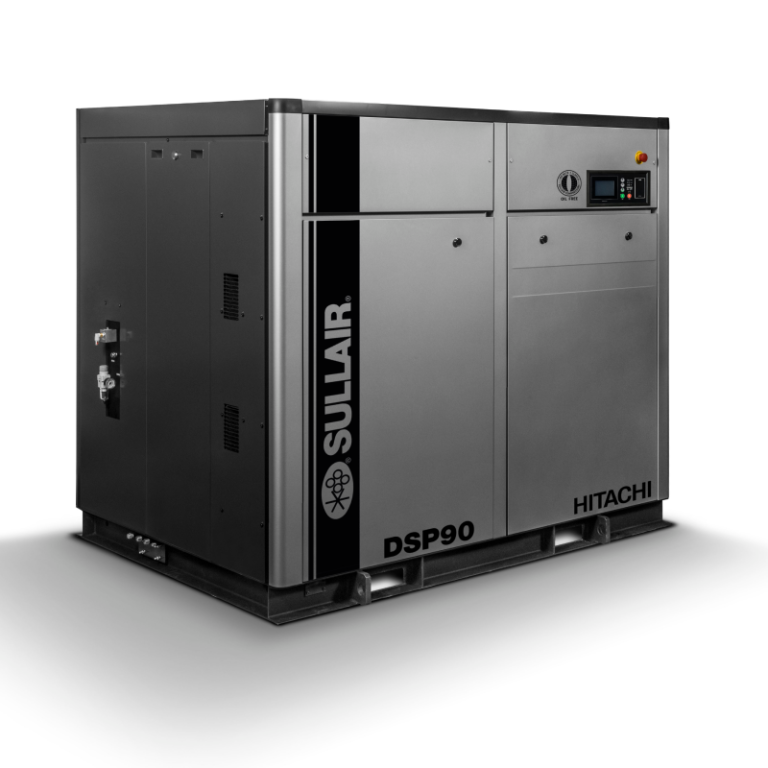
One example included in the current industry landscape is the development of water-lubricated airends, such as the technology presented by Green-Y.
In this concept, water can simultaneously serve as lubricant, sealant and coolant inside the compression chamber, seeking to reduce mechanical and thermal losses and enable single-stage, oil-free compression.
These developments show where the industry is headed:
lower losses, lower thermal impact, higher efficiency and new compression architectures.
10. A smart system needs smart maintenance
Digitalization does not eliminate maintenance.
It makes it more precise.
Sensors and monitoring systems can detect trends, but data must be turned into action.
An efficient maintenance program should consider:
- Inspection: Verify the physical condition of compressors, filters, dryers, drains, piping and points of use.
- Measurement: Record pressure, flow, energy consumption, dew point and air quality according to process needs.
- Analysis: Compare current data with historical records to detect deviations.
- Action: Fix leaks, replace filter elements, adjust parameters and attend to equipment showing abnormal conditions.
- Verification: Confirm that the intervention actually produced the expected improvement.
This cycle enables the evolution from purely preventive maintenance toward more predictive, condition-based strategies.
11. What should a modern compressed air system look like?
An efficient system should not be analyzed as a collection of independent equipment.
It must be understood as a chain:
Intake → Compression → Separation → Drying → Filtration → Storage → Distribution → Monitoring → Point of use
And when there is nitrogen demand:
Compressed air → Treatment → PSA generation → N₂ storage → Distribution → Process
Each stage affects the next.
- A poor intake condition can affect the compressor.
- An incorrectly sized compressor can increase consumption.
- An undersized dryer can compromise quality.
- A saturated filter can cause pressure loss.
- A leak can increase demand.
- A network without monitoring can hide the problem.
- And a system without air quality measurement cannot prove it meets process requirements.
Real efficiency lies in the interaction of all these elements.
12. Five questions every plant should ask
If you are evaluating the performance of an industrial compressed air system, start with these questions:
Not all points of use have the same requirements.
Installed capacity does not necessarily represent actual demand.
Efficiency must be evaluated with data, not just catalog specifications.
Leaks, pressure drop, oversizing, excessive pressure and inefficient equipment can all contribute to consumption.
What is not measured can hardly be managed consistently.
The future of compressed air is measurable, connected and efficient
The evolution of industrial compressed air systems is leading plants toward a new way of managing one of their most important utility services.
The trend points toward systems where:
quality is measured,
consumption is monitored,
efficiency is analyzed,
maintenance is anticipated
and production adapts to demand.
- Filtration can no longer be separated from energy efficiency.
- Air quality can no longer be evaluated only visually.
- Nitrogen generation no longer has to depend on an external supply.
- Maintenance no longer has to be based solely on schedules.
- And the compressor must no longer be considered the only protagonist of the system.
The real challenge is to integrate all these elements to build a compressed air infrastructure that is reliable, efficient and ready for the needs of modern industry.
Conclusion
An efficient industrial compressed air system begins well before the compressor and ends well after the generation point.
It requires analyzing inlet air quality, correctly selecting treatment equipment, establishing the required purity classes, monitoring performance, controlling energy consumption and maintaining every component under adequate operating conditions.
When there is also nitrogen demand, on-site generation can be integrated into this infrastructure and turn compressed air into a source for producing N₂ on demand.
Technology will continue to evolve, but the fundamental principle remains:
measure to know, analyze to decide and optimize to produce better.
At AIRTEC, we integrate solutions for industrial compressed air focused on quality, efficiency, reliability and monitoring — from air diagnosis and treatment to system optimization and on-site nitrogen generation.
If your plant is looking to reduce energy consumption, improve compressed air quality or evaluate new nitrogen generation alternatives, the first step is understanding how your system is actually performing.
Because an efficient system is not the one with the most equipment — it is the one with the right equipment, operating under the right conditions and backed by data.
→ Compressed air capacity and consumption audit · View all products