

Key Tips for Installing an Industrial Air Compressor.
| 25 April, 2025If your plant is about to install an industrial air compressor, whether for the first time or to replace an old one, it’s essential to consider certain key factors to ensure everything works smoothly from the start. Choosing the right size, as well as defining the proper location and installation of the equipment, can make the difference between an efficient operation and one full of issues.
Efficient Compressed Air System – Installing an Industrial Air Compressor
Nowadays, compressed air is considered a basic utility in many plants, on par with other essential resources like water, electricity, and gas. Without compressed air, many production lines simply wouldn’t run. That’s why the installation of a compressor must receive the same attention as any other critical infrastructure within the plant. Make sure the compressed air system is well planned from the beginning by following industrial air compressor installation tips and applying best practices for compressor setup.
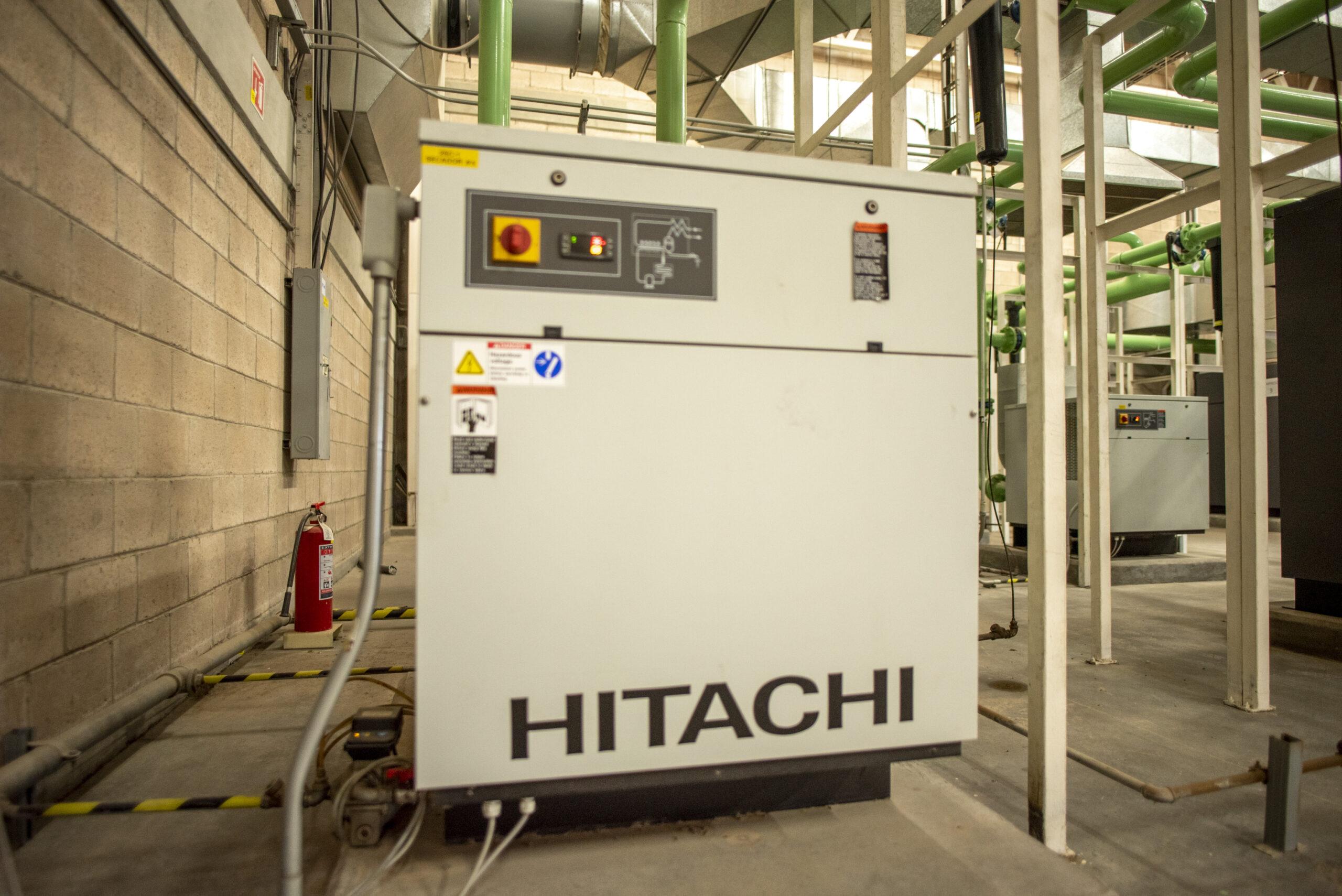
A detailed air compressor installation checklist can help guarantee everything is done right, preventing costly downtime. Knowing how to install a compressed air system correctly and installing industrial air compressors safely are key to maximizing system reliability and performance.
Before Installation: Define What You Really Need
Before making any decisions about purchasing or installing an air compressor, the first step is to have a clear understanding of the type of compressor you need and, most importantly, the right size. This step is crucial because your plant’s air requirements must cover not only current operations but also potential future needs. For this, it’s highly recommended to conduct an air audit to thoroughly understand the specific site requirements. An audit helps detect possible leaks, measure actual air consumption, and adjust your purchase to what you truly need. Sometimes, existing air systems consume more than necessary due to poor previous installations or lack of maintenance.
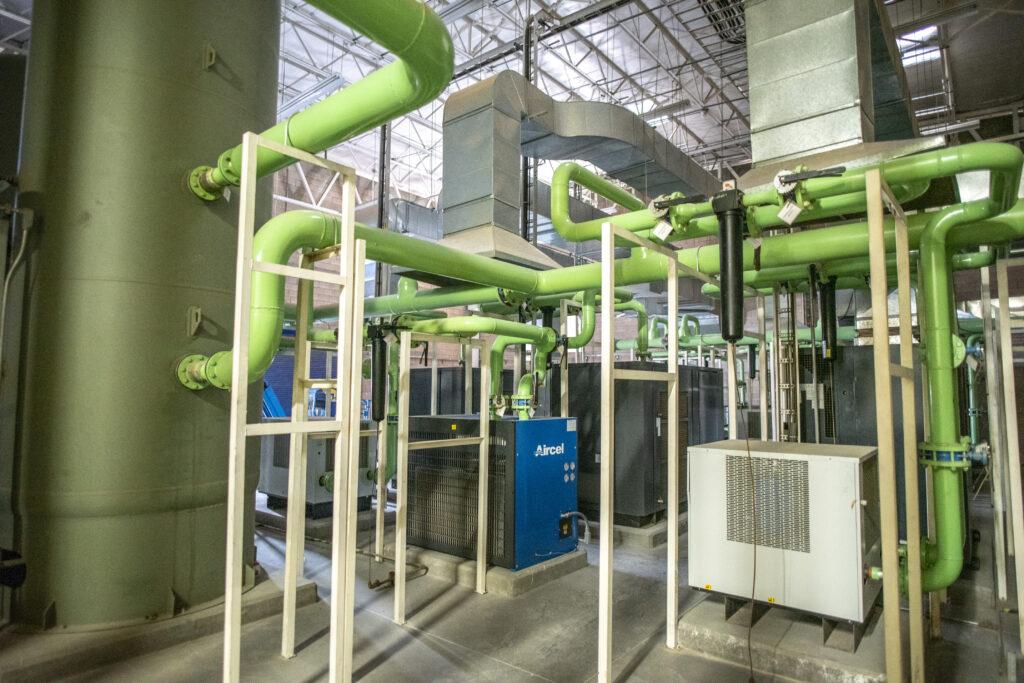

If you already have a compressor that doesn’t meet your needs, buying a new one is not always necessary. The key lies in having accurate data about your consumption and making the necessary adjustments.
Beyond consumption and capacity, a fundamental aspect often overlooked is defining the required compressed air quality for your production processes. Air quality must align with the standards of the product and machinery used, since contaminated air can directly affect final product quality, reduce equipment lifespan, and even jeopardize process safety.
Proper Selection in Compliance with ISO 8573-1
To ensure proper selection, it’s recommended to follow the ISO 8573-1 standard, which classifies compressed air quality based on three main contaminants: particles, water (humidity), and oil. This standard precisely establishes the maximum allowed levels for each contaminant according to the required quality class for your application. For example, industries such as food, pharmaceutical, or electronics demand stricter air classes than general manufacturing applications.
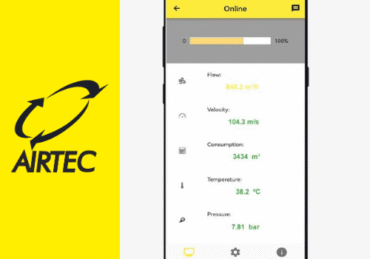
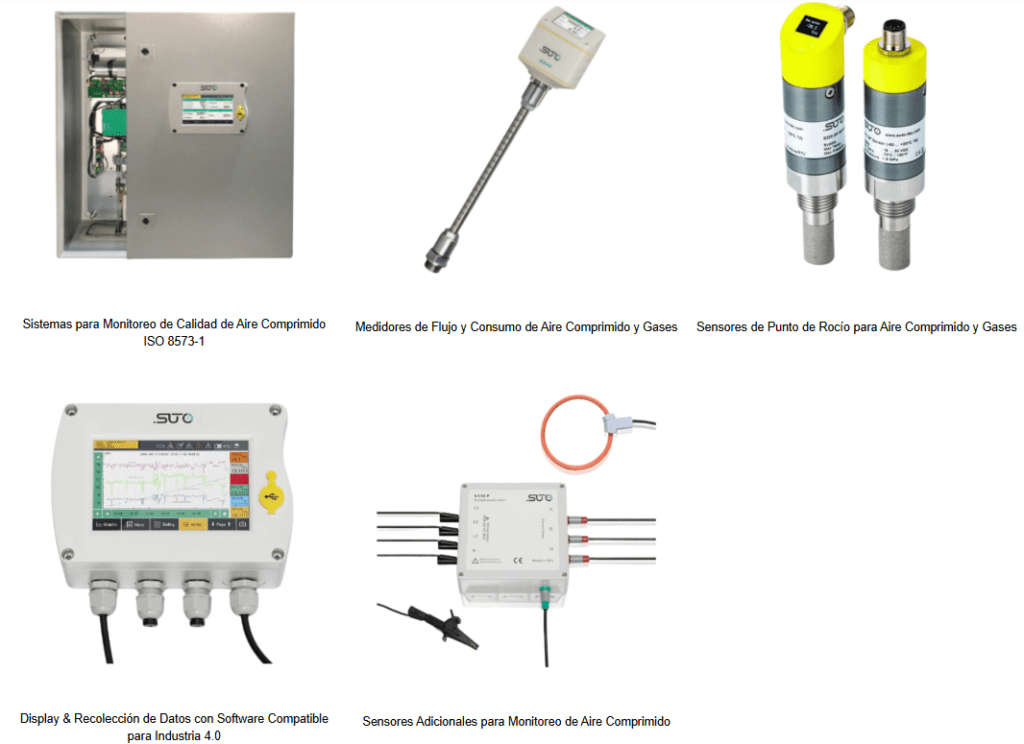
Equally important as defining quality is the ability to continuously verify it. Having compressed air quality monitoring systems — such as dew point sensors, particle detectors, and online oil monitors — ensures the system operates within defined parameters. These systems provide key benefits like:
- Early detection of deviations before affecting production
- Reduction of downtime and unexpected stops
- Compliance with quality regulations and audits
- Extension of machinery and filter lifespan
- Continuous improvement through historical data and operation trends
Including this evaluation from the start of the project guarantees the system is not only efficient but also compliant with the quality standards required in your plant. This avoids rework, unnecessary downtime, or long-term operational problems.
All of these points are essential for applying best practices for compressor setup and following the air compressor installation checklist, making sure your system meets the highest standards for reliability and performance.
Ventilation: Don’t Trap It Without Air
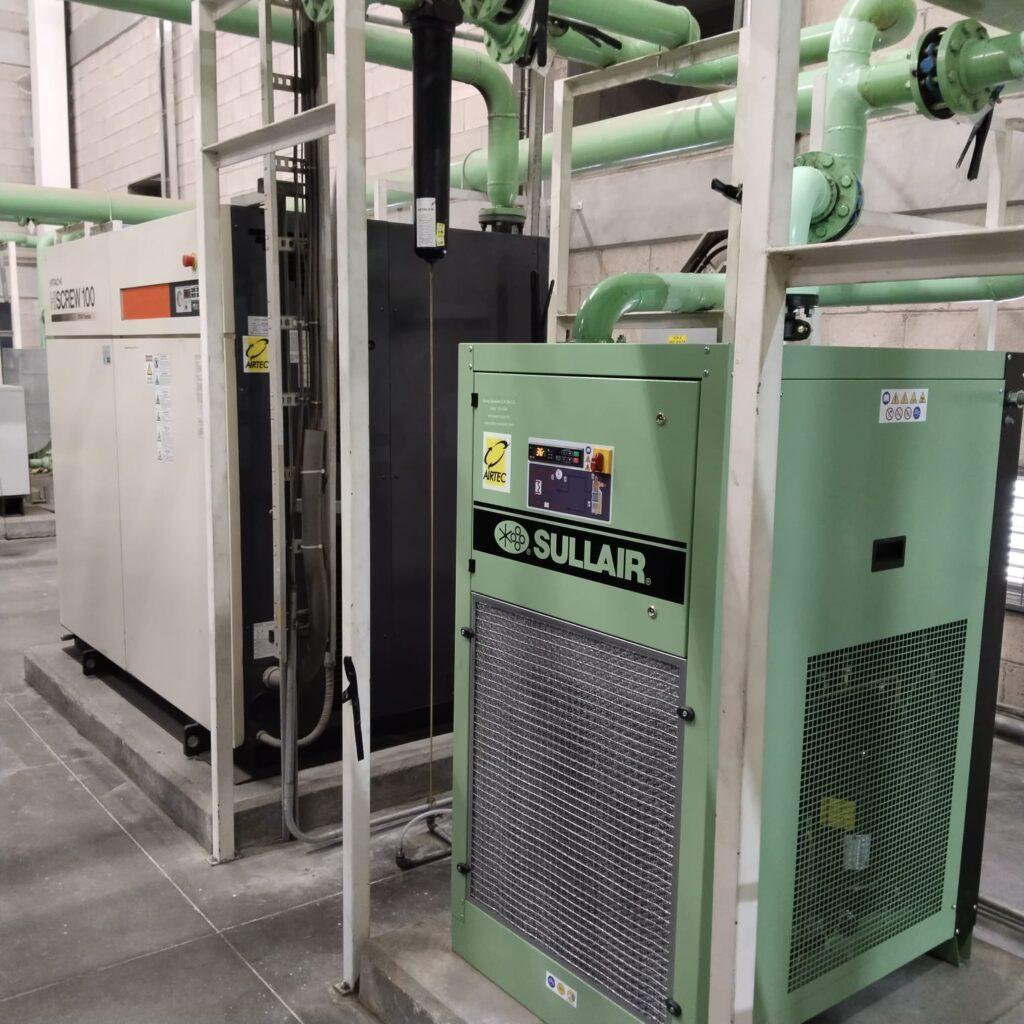
Ventilation is crucial when installing an air-cooled compressor. Most manufacturers recommend leaving at least one meter of free space around the compressor to allow proper air circulation. This space is not only necessary for equipment performance but also facilitates maintenance and repair tasks. If you decide to install the compressor in an enclosed room, make sure there is no negative pressure in the space. This can happen if doors close by themselves or are difficult to open from the inside. If you notice this issue, check the manufacturer’s manual and consult your trusted supplier to resolve it.
https://airtec.global/product/preventive-maintenance-contracts/
Fresh Air for the Compressor, Hot Air Out
To improve your compressor’s performance and prevent overheating, you can channel fresh air to the equipment’s intake using ducts. This way, the hot air generated by the compressor can be expelled outside the plant, avoiding recirculation and overheating.
This process not only enhances compressor efficiency but also allows you to reuse the hot air generated during operation to heat plant areas in winter, helping reduce heating costs. If you decide to install ducts, make sure they are properly sized and calculated by a company specialized in HVAC systems (heating, ventilation, and air conditioning).
Improperly sized ducts or those with too many bends can cause pressure drops, which affect compressor efficiency. In some cases, installing a booster fan is necessary to ensure adequate airflow. Some Sullair compressor models, for example, come with high-pressure fans that help mitigate these issues without additional costs.
Read more: https://airtec.global/?s=sullair+compressors&post_type=product
Following industrial air compressor installation tips like proper ventilation and airflow management is essential for installing industrial air compressors safely and ensuring long-term system reliability.
Proper Installation from the Start = Fewer Problems Later
An industrial air compressor is a significant investment for your plant. Installing it correctly from the beginning is crucial to avoid future failures and ensure the system operates at peak performance for years. Proper installation planning not only reduces the risk of unexpected downtime but also improves energy efficiency and lowers long-term maintenance costs. https://airtec.global/product/intelligent-controls-industrial-compressed-air-systems/
Having an advisor for compressed air systems and working with authorized distributors of brands like Hitachi and Sullair can guarantee a correct installation, tailored to your plant’s specific needs and aligned with the best practices of the industry. Don’t underestimate the importance of having proper guidance from the start to avoid surprises down the road.
Let’s talk about how we can make your compressed air system more efficient and cost-effective!
Why Choose Airtec?
At Airtec, we have specialist technicians with over 30 years of experience in compressed air systems. Our track record allows us to guarantee quality service and personalized solutions for each client. We specialize in optimizing compressed air systems, ensuring your equipment operates at maximum performance.
If you have a Hitachi compressor or other equipment that requires maintenance, contact us. Our team is ready to help you maximize your system’s performance and keep your operations running at 100%.
Following industrial air compressor installation tips and applying best practices for compressor setup ensures your system’s longevity and reliability.
Trust the experts at Airtec and take your industrial compressed air systems to the next level!
CONTACT US! Our experts will provide you with the best alternative for your business.